3D Harness Routing
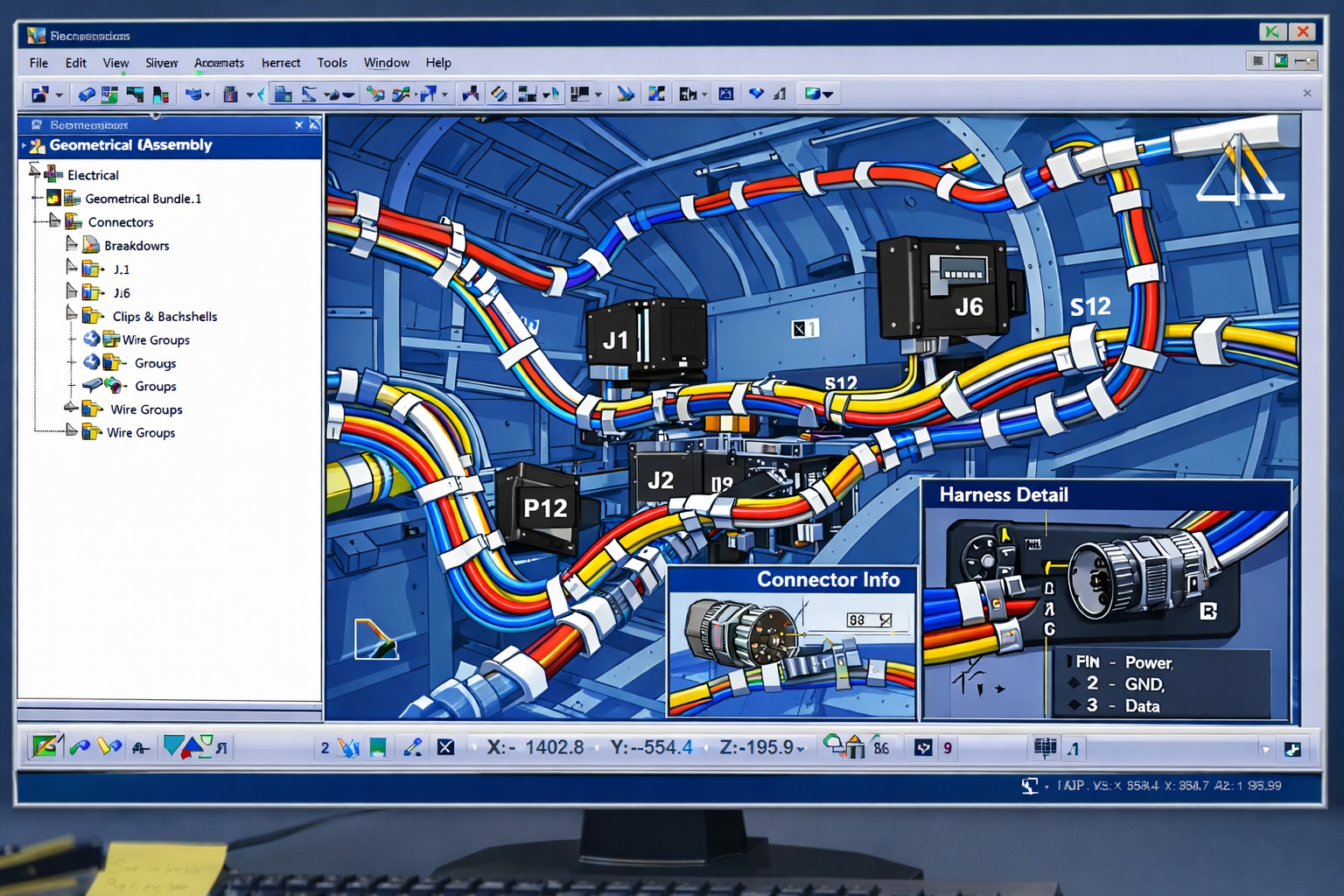
3D Harness Routing is a critical engineering activity within the development of modern electrical systems. It translates electrical schematics and system architecture into a fully integrated, installation-ready harness design inside the 3D product environment. The objective is not only to define where a harness runs, but to ensure that the routing is manufacturable, installable, maintainable, and compliant with program and certification requirements from the earliest stages of design.
At WireWorks Engineering, 3D harness routing is approached as an engineering discipline rather than a drafting activity. Every routing decision is driven by system integration, structural constraints, environmental considerations, and long-term operational reliability. The harness becomes an integral part of the product design, rather than an afterthought added late in the development cycle.
Integrated System Design
Our engineers develop harness routing directly within the customer’s native 3D environment, ensuring full alignment with mechanical design, equipment installation, and structural interfaces. Harness paths are defined with careful consideration of:
Structural interfaces and installation space envelopes
Bend radius compliance and bundle protection
Separation requirements between power, signal, and sensitive systems
Accessibility for installation and maintenance
Clamping strategy and support spacing
Environmental exposure such as vibration, temperature, and mechanical loads
By integrating the harness early in the digital mock-up (DMU), potential clashes, installation conflicts, and late-stage design changes are significantly reduced.
Design for Manufacturing and Installation
A well-routed harness must transition seamlessly from design to production. Our routing methodology ensures that harnesses can be manufactured efficiently and installed without ambiguity on the assembly line. This includes:
Logical bundle segmentation and breakout locations
Optimized routing for installation sequence and accessibility
Realistic bundle diameters and protective coverings
Clear definition of fixing points, P-clips, and support hardware
Consistent routing philosophy across platforms and variants
This approach minimizes manufacturing risk, reduces installation time, and prevents costly rework during production.
Compliance and Engineering Assurance
Wire harnesses are safety-critical systems. Our routing practices are aligned with aerospace and high-reliability industry standards, ensuring compliance with EWIS best practices and certification expectations. Routing decisions are documented and traceable, supporting design reviews and certification activities throughout the program lifecycle.
Deliverables
A typical 3D Harness Routing package includes:
Fully routed 3D harness assemblies within the aircraft or system model
Installation-ready routing definition with validated clearances
Clamp and support definition
Bundle segmentation and branch definition
Interface alignment with electrical and mechanical data
Data prepared for downstream flattening and formboard generation
Value to Your Program
Partnering with WireWorks Engineering ensures that harness routing is executed correctly from the start. Our experience in aerospace and high-complexity platforms enables us to anticipate integration challenges before they become program risks. The result is a clean, efficient, and certifiable harness installation that supports both engineering and manufacturing objectives.
For OEMs and Tier-1 suppliers seeking a reliable engineering partner, our 3D harness routing capability provides predictable outcomes, reduced development iterations, and confidence that the EWIS installation will perform as intended throughout the lifecycle of the product.